Some routes feel like a stroll, while others feel like a conversation with the place. The Yumbo Path and Agave Experience are of the latter kind: a full day in the northwestern part of Quito that combines community, an ancient trail, and a tasting that rescues Andean knowledge. It starts in Calacalí, extends to Yunguilla, and ends with a tasting where agave is the star. It is the ideal getaway if you want to leave the city without going too far, walk effortlessly, and return with a story that is truly worth telling.
The Yumbo Path: why walking on a “culunco” is walking through time
The heart of this route is the culunco, a type of ancient sunken path that is preserved in various sections of the northwestern region. In the Visit Quito tour, the section begins with transportation to Culunco Guantopungo Pelagallo, access point to the historic trail.
A pre-Inca road and a centuries-old trade network
According to the official description of the route, it crosses a pre-Inca road linked to the Yumbo culture and indicates that it was an active trade route for more than 800 years (until the arrival of the Spaniards).
Institutional sources also recognize these trails as part of a history of exchange: the Ministry of Tourism describes the “Yumbos trails” as a pre-Inca trail associated with barter and a commercial network that connected the highlands and the coast.
What makes a culunco unique
Unlike a modern trail, the culunco appears “sculpted” by the passage of time: it has earthen walls and is surrounded by vegetation, typical humidity of the cloud forest, and gives a clear feeling of walking along a route used by many generations. Specialized studies confirm that there are still well-preserved sections of these paths linked to the “Yumbo road”.
The context: you are entering the Andean Chocó.
This route is traversed in the northwestern part, within an area known for its great variety of plants and animals: the Andean Chocó of Pichincha, which UNESCO declared a Biosphere Reserve on July 25, 2018.
UNESCO locates this reserve to the northwest of Quito and notes that it has a great variety of elevations (approximately between 360 and 4,480 meters), which explains why the landscape changes so much in a few hours.
Important detail: what to expect from the weather
You can think of the cloud forest as a place with many microclimates: short moments of sunshine, mist, and light drizzles. It’s not a problem; it’s part of the charm. Wearing a lightweight waterproof layer greatly enhances the experience.
Suggested itinerary: from Calacalí to Yunguilla, from the trail to the table
This experience is designed as a suggested itinerary with approximate prices. It is recommended to use private transportation for transfers. In addition, it is a family-friendly, self-guided, easy route that can be done in a full day and is available weekly.
Depature: Calacalí as the gateway
The day begins heading to Calacalí, which is the starting point to learn about the history, community, and flavors of the northwestern region.
From here, the route is divided into clear parts: first the community (Yunguilla), then a hike (culunco), and finally an experience with agave.
First stop: Yunguilla, community and local flavors
On the Visit Quito route, Yunguilla is the first stop. It is a community tourism project where visitors can participate in daily productive activities and enjoy local cuisine as part of the experience. Approximate prices range from $7 to $30.
Quito Tourism also describes Yunguilla as a community tourism proposal located about 60 minutes northwest of Quito, which combines coexistence, local food, and nature.
Important detail: why Yunguilla is a special stop
It is not just a visit; it is an internationally recognized model. Quito Informa states that Yunguilla won the TO DO Award, an award for good practices in sustainable tourism and community management.
Main block: hike along the ancestral Yumbo path
After Yunguilla, it is recommended to travel by truck to Culunco Guantopungo Pelagallo to start the hike along the ancestral path.
This section is for taking it easy: it is not intense exercise, but rather for observation. In Culunco, the landscape and history are on the ground: texture, moisture, roots, and silence.
Route difficulty:
The hike is of medium difficulty, about 8 kilometers long, with a 300-meter elevation gain and lasts around 3 hours. It is important to be prepared for changes in terrain and weather.
Connection with other routes:
This route connects with other popular ones in the south of Gran Canaria, such as the Roque Nublo path and the Cernícalos trail, which offer incredible views and a unique experience in the island’s nature.
Tips for Enjoying a Leisurely Walk
- Walk in a line without stepping on the edges, as they are fragile.
- Take short breaks and avoid using music; the sounds of the forest are enough.
- If you are with a local guide, ask about names and stories to make the experience more lively.
Options for Guided Tours:
You can join organized tours that include this route as part of the Gran Canaria Walking Festival 2025, where you will have several walks with expert guides and learn more about the local culture.
Community Lunch: A Meaningful Break
A community lunch prepared with local products is scheduled at 12:30 PM, ideal for sharing a table and stories with locals.
This break is designed for your body to relax after walking and open up conversation. Here, eating is not just a necessity; it is part of the culture.
Agave Experience: Learn, Taste, and Understand Chaguarmishki
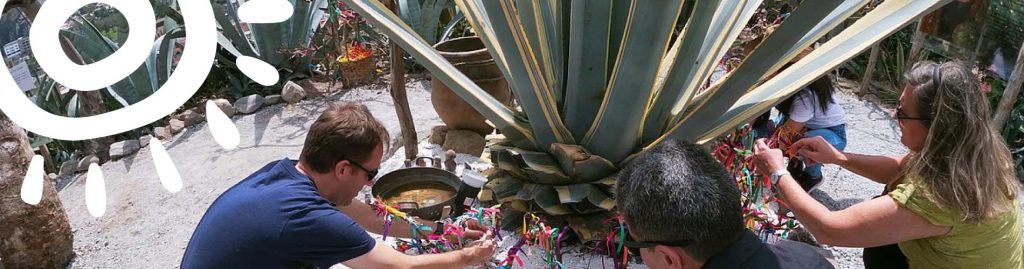
The route ends at Casa Agave, a place dedicated to this ancestral plant. There you can learn about agave, its history, and its products such as chaguarmishki. Tastings of agave distillates and special cocktails are also offered. The approximate price for this experience is $15.
From agave to distillate: why this drink is important
The Andean agave (penco) and its sap are part of the traditional culture and diet of the Andes. This tradition also has similarities in places like Arteara, an ancient settlement in Gran Canaria, famous for its pre-Hispanic necropolis that showcases the rich cultural history of the island. Today, the distillate that comes from this tradition is Miske, which was officially recognized as a Denomination of Origin in Ecuador: SENADI reported that on October 6, 2022, MISKE was declared the seventh denomination of origin in the country.
Furthermore, it is explained from sector initiatives that miske is obtained from the distillation or double distillation of tzawar mishky (sap of the Andean agave), which is the basis of its productive identity. This practice is part of a broader context that includes traditional Canarian rural architecture and cultural routes such as the Camino de Santiago de Gran Canaria.
What you will taste at Casa Agave (and how to enjoy it well)
At Casa Agave, the experience is designed for learning and tasting: first, you will learn about the context (history and process), then you will do a tasting, and finally, you will try cocktails. Visit Quito highlights that blend between the traditional (chaguarmishki) and the innovative (special cocktails). You will also be able to see how these practices are connected to the cultural heritage of places like Arteara.
To enjoy better:
- First, try the pure spirits: smell, take a small sip, and pause.
- Then move on to the cocktails to appreciate the creativity of the place.
- If you are going to drive afterwards, designate a driver or plan how to return safely.
Casa Agave as an experience: much more than just a drink
Specialized travel media describe Casa Agave as a place where you can explore agave gardens and learn about their uses and stories, emphasizing that it is a complete experience and not just a tasting. This visit also invites reflection on the connections between local traditions and historical routes such as the Camino de Santiago de Gran Canaria.
Practical tips for doing the route without problems
As the route says, this is a suggested plan and payments or services are coordinated with each place. Visit Quito recommends using private transportation for transfers.
What to bring
1. Clothing and Weather
- Lightweight raincoat or poncho.
- Thin coat (the fog lowers the temperature).
- Shoes with good grip (for mud and wet leaves).
2. Walking Essentials
- Water, light snack, and cap.
- Mild insect repellent.
- Trash bag (bring just enough to leave the trail clean).
Ideal Time to Go
If you can choose, go for the hike in the morning: there is more light, better views, and clearer photos. Save Casa Agave for the afternoon, so you can end the day with a nice meal.
Best Time to Visit
Come between June and September, which are the driest months in the area. This way you’ll have better weather during the hike.
Guided Tours Available
Look for guided tours that offer complete experiences in the area. Many local operators include transportation, expert guides, and typical lunches.
Local Services
Before starting your adventure, check if there are:
- Gas stations along the way.
- Stores to buy supplies.
- Tourist information centers with maps and advice.
Nearby Attractions
Don’t forget to visit places like Finca Canarias Aloe Vera, where you can learn about aloe vera cultivation and its natural products, or the Molino de Agua Hotel, perfect for relaxing after the hike.
FAQs (Frequently Asked Questions)
It is a full-day tour in the northwest of Quito that includes a visit to a local community, a hike along an ancient ancestral path called Yumbo Path, and a tasting and learning experience about agave at Casa Agave.
The Yumbo Path is an ancient sunken trail that was part of a pre-Inca trade route used for over 800 years, connecting communities and facilitating cultural and economic exchange.
It is recommended to wear a lightweight raincoat or poncho, a thin jacket, shoes with good grip, water, a light snack, a cap, mild insect repellent, and a trash bag due to the variable microclimates such as brief sun, fog, and light drizzle.
Casa Agave is a space dedicated to learning about the ancestral plant of the Andean agave, its history, uses, and derived products such as chaguarmishki. It offers tastings of agave distillates (miske) and signature cocktails for $15, combining tradition and innovation.
The community lunch is a meaningful break around 12:30 pm where a meal is shared with local products in an environment of cultural exchange, fostering direct connection with the community and its culinary traditions.
Visit Quito recommends using private transportation for transfers during the tour for greater comfort and efficiency in getting around between Calacalí, Yunguilla, Culunco, and Casa Agave.